Alcove a Craftpine practice

D
Appendix D · The category record, illustrated

Every company this study leaned on, in one place: what each built, what it raised, and how it ended. The pictures are the fastest way to see that the machines were real and the failures were not mechanical.

Facts below are held to the study’s sourcing rule: capital figures are documented amounts from securities filings or dated press, never estimates; fates carry dates. Photographs are reproduced at review scale from the credited publishers while permissions are cleared; any rights holder who objects will see the image replaced with the practice’s own photography or a drawing.

Closed

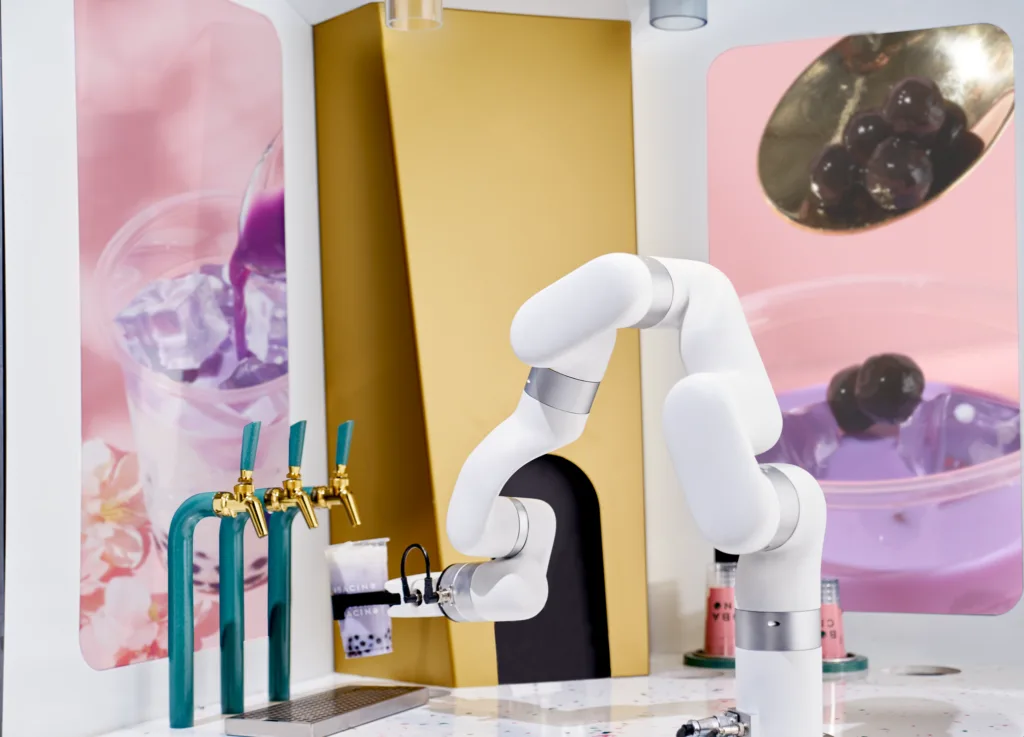
Bobacino robotic boba bar render: white robot arm holding a cup beneath brass taps
Bobacinoclosed
Los Angeles · founded 2020 · ~US$3.5M crowdfunded (SEC Reg A+, 2021 + 2022)

Incorporated inside a venture studio in March 2020, it unveiled a robotic boba bar prototype that November and raised about US$3.5 million from crowd investors. It never advanced past prototypes and trade-show demos. The founder resigned in November 2023, development stopped, and the closure statement blamed the difficulty of securing resources for development and regulatory compliance.

Photo: The Robot Report · reproduced for review, permission being sought
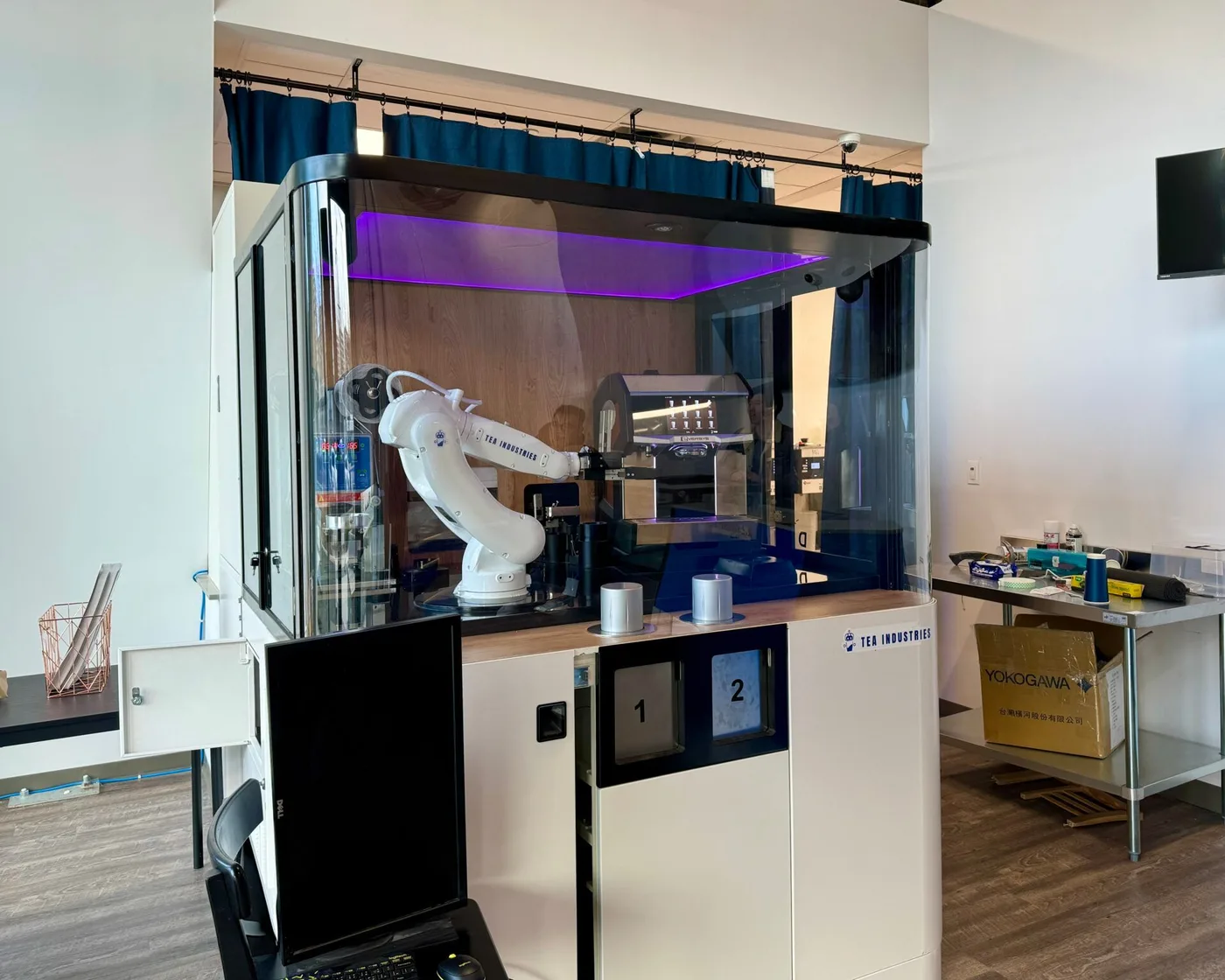
Tea Industries robotic bubble-tea shop interior with a white robot arm in a glass enclosure
Tea Industriesclosed
Richmond, BC · opened March 2024 · capital not disclosed

British Columbia's first robot bubble-tea shop: a caged robotic arm brewed, shook, and sealed each order in about two minutes, with staff still on hand to prep ingredients and clear faults. It opened in March 2024 and closed quietly in 2025; local press reported the closure without a post-mortem, and no public account of why has been found. The Canadian precedent closest to this study's format, and it failed.

Photo: Daily Hive (Dished) · reproduced for review, permission being sought
Exited, absorbed, or out of retail

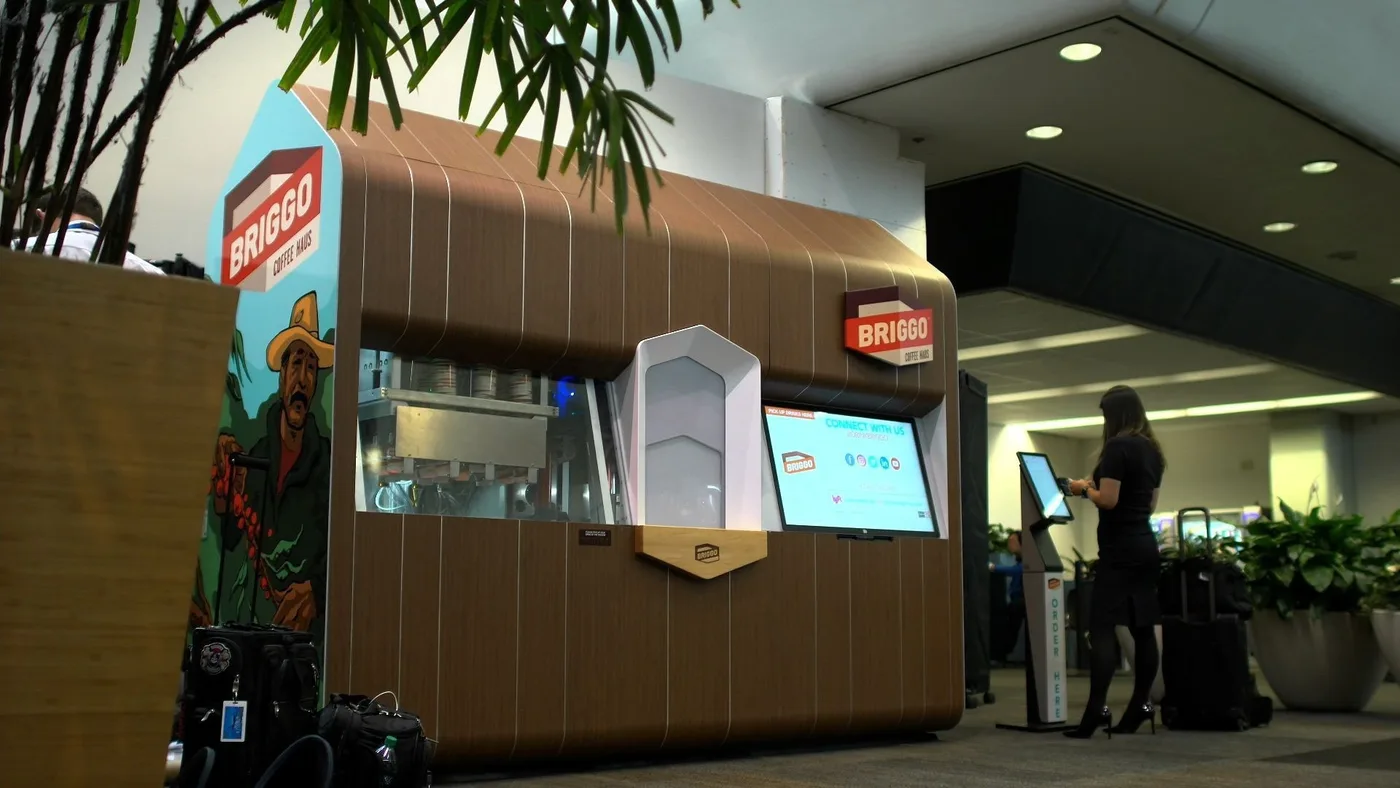
Briggo Coffee Haus kiosk in an airport terminal with a traveller ordering at a screen
Briggoacquired 2020
Austin · founded 2008 · US$19M raised pre-acquisition (Daily Coffee News)

An entrant carrying an order of magnitude more capital than this program would ever commit. Founded by a semiconductor engineer, Briggo placed its Coffee Haus kiosks with employers, grocers, and airports across a decade of raises. Costa Coffee, a Coca-Cola subsidiary, acquired it in late 2020 on undisclosed terms, rebranded the fleet, and has since wound the format down. Five active kiosks at the most recent figure found. The machine survived; the company did not remain independent.

Photo: Briggo via PR Newswire · reproduced for review, permission being sought
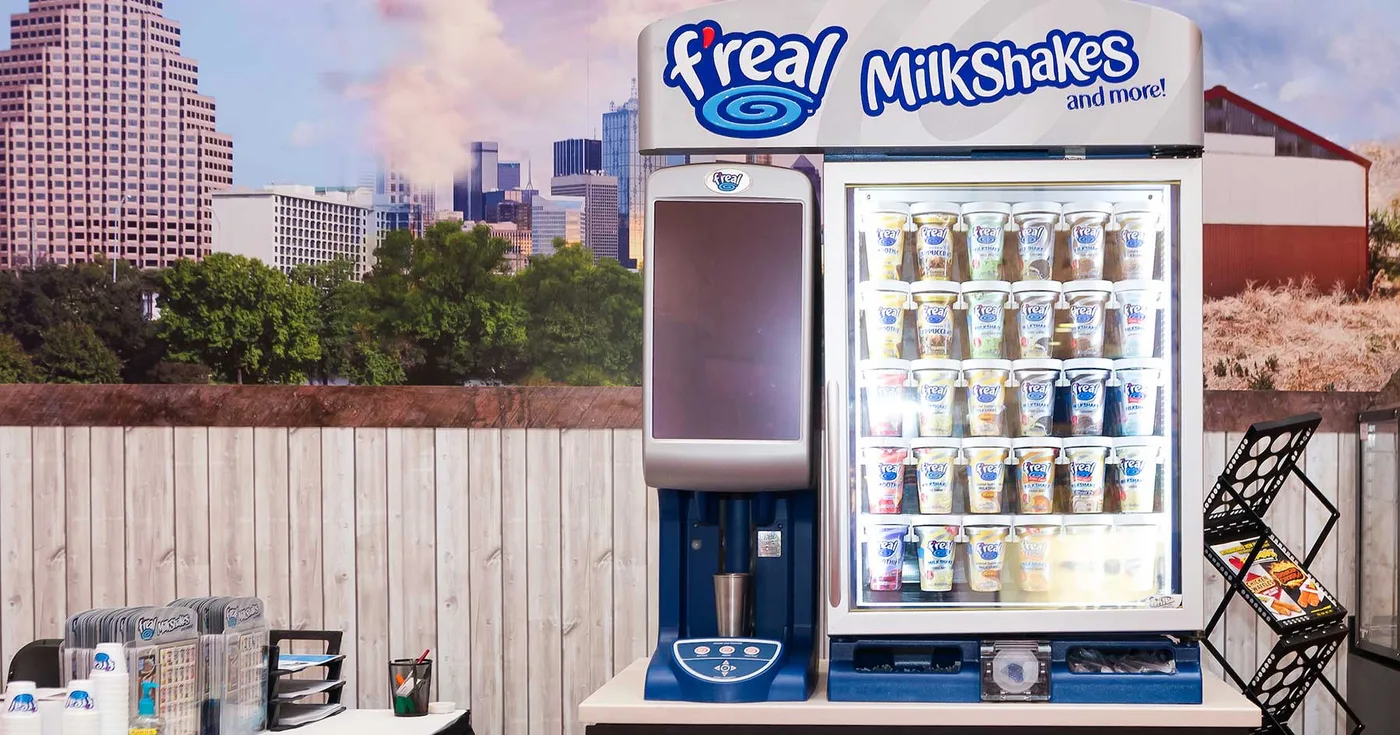
f'real milkshake station: freezer cabinet of cups beside the self-serve blender
f’real Foodsacquired 2012
Emeryville, CA · founded 1995 · privately held to acquisition

The category's one durable success, and it is not a robot: a self-serve in-cup blender for real-milk shakes, first installed in a Tulsa convenience store in 2003 and in roughly 9,000 locations by December 2012, when Rich Products acquired it. The patents it holds on in-cup blending run to 2037 (chapter 03); a 2019 jury verdict against two imitators showed they are enforced.

Photo: CSP Daily News (Informa) · reproduced for review, permission being sought
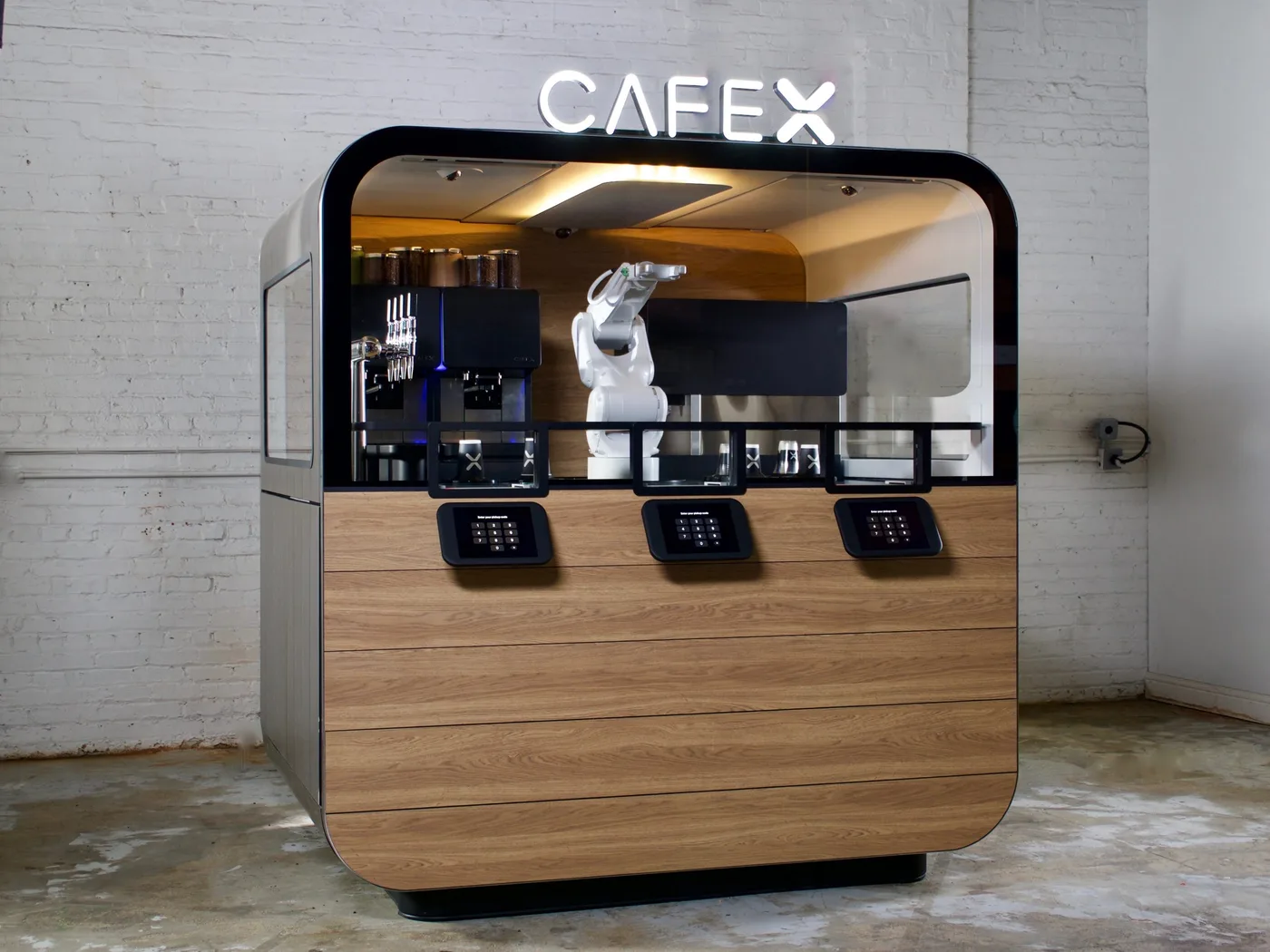
Cafe X kiosk with a white robot arm behind glass and three ordering tablets
Cafe Xleft retail
San Francisco · founded 2014/15 · capital not disclosed

Put an industrial robot arm behind glass in downtown San Francisco in January 2017. It closed all three city locations in January 2020, its founder summarizing the lesson as less robot and more old-school coffee, then lost its airport outposts to the pandemic within months. The company survived by selling machines to other operators instead of running stores.

Photo: The Spoon · reproduced for review, permission being sought
Under going-concern doubt

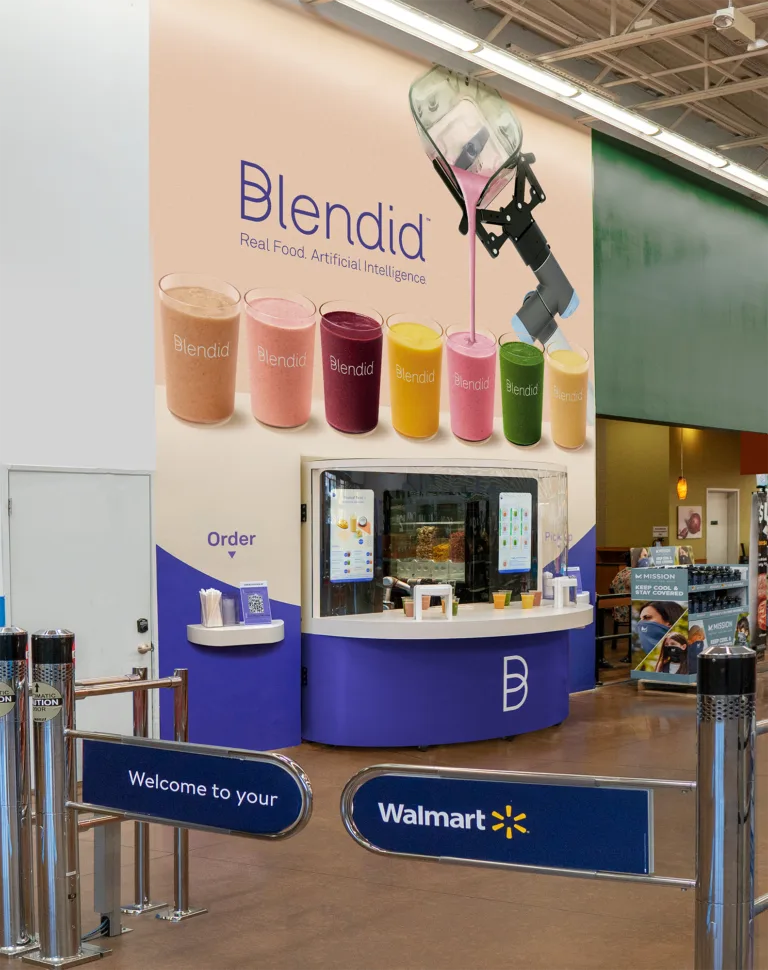
Blendid smoothie kiosk inside a Walmart entrance with a large branded wall
Blendid (6d bytes)going-concern doubt
Sunnyvale, CA · founded 2015 · capital not disclosed; Regulation A+ crowdfunding history (SEC, CIK 1830909)

An eight-by-eight-foot robot-arm smoothie kiosk, launched 2019, piloted at Walmart and on campuses, with a claimed pipeline of hundreds of kiosks that did not materialize. Its FY2025 annual report discloses substantial doubt about continuing as a going concern, thirteen employees, a $308,000 obsolete-inventory write-off, and the original kiosk discontinued in favour of a smaller, cheaper unit sold outright rather than leased.

Photo: The Spoon · reproduced for review, permission being sought
Operating

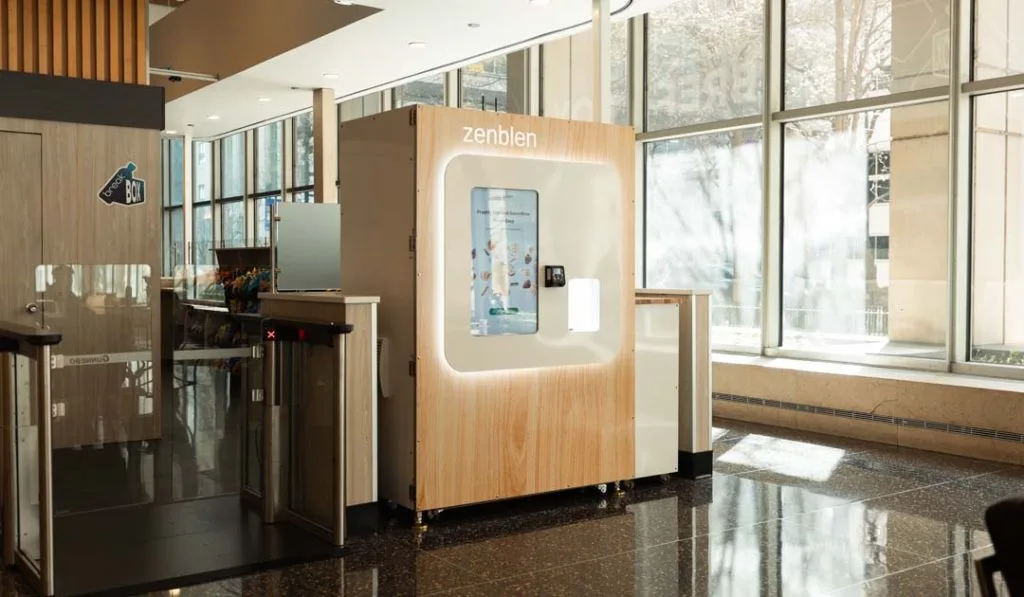
Zenblen kiosk in a glass-walled Chicago lobby beside security turnstiles
Zenblenactive
Chicago · founded 2018 · US$4.6M documented (SEC Form D, 2023 + 2026)

The category's best-documented operator, and this study's chapter 03 subject. Eleven kiosks at audit, every one inside an access-controlled venue, placed through foodservice procurement, on venue-fee-plus-retail economics. One unit's 2,500 smoothies in calendar 2023 is the only measured throughput figure the category has published.

Photo: Polsky Center, University of Chicago · reproduced for review, permission being sought
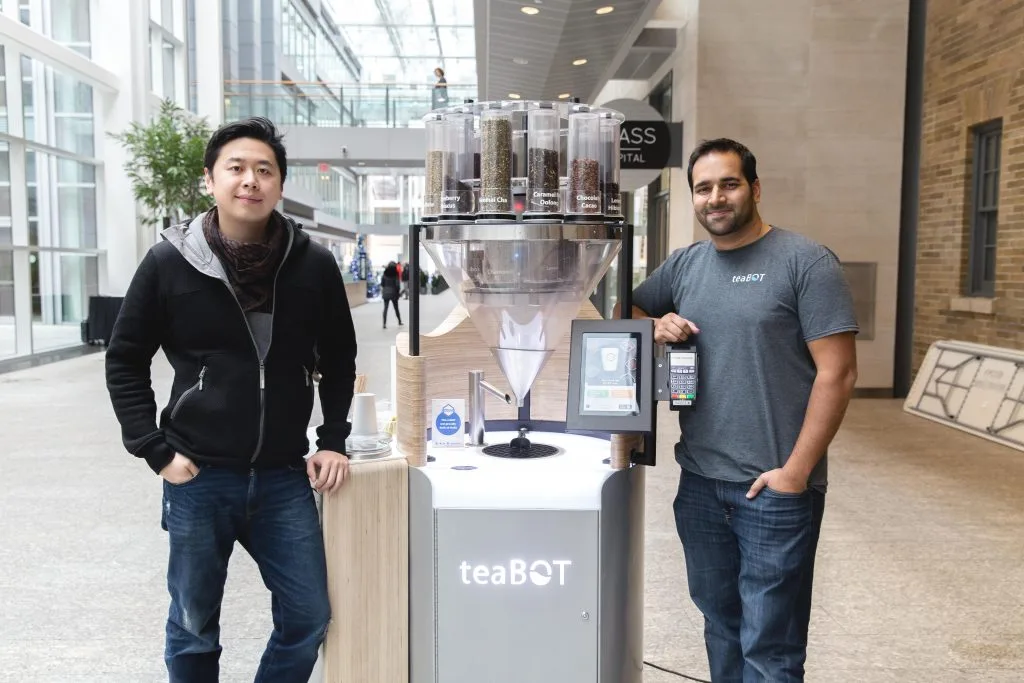
teaBOT founders standing beside their tea kiosk in a Toronto atrium
teaBOTactive
Toronto · founded 2013 · Y Combinator S15; venture amounts undisclosed

A robotic kiosk blending custom loose-leaf tea in under thirty seconds, placed in cafes, libraries, and campuses by 2016. It survived its decade by pivoting from running retail kiosks to selling the machine as equipment. Its chief executive also serves as Zenblen's CTO, which is how small this category's talent pool is.

Photo: Digital Main Street · reproduced for review, permission being sought
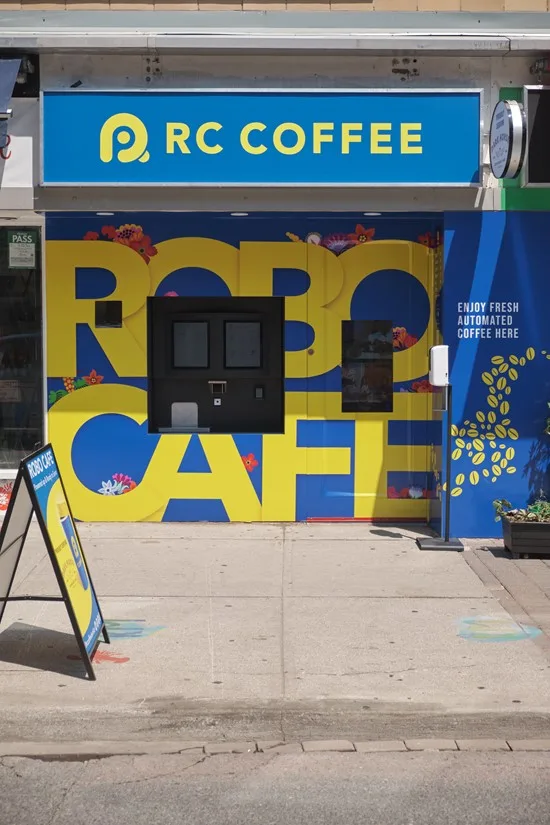
RC Coffee Robo Cafe storefront in blue and yellow with a pickup hatch
RC Coffeeactive
Toronto · first kiosk 2020 · internally funded by its payments-company parent

Toronto's unattended espresso network: first kiosk in fall 2020 with a local roaster, its own Robo Cafe brand from June 2021, and about a dozen sites today, including hospital towers. Fresh dairy, cashless, unattended, and absent from DineSafe across five years of operation, which is half of chapter 04's enforcement finding.

Photo: Newsfile / RC Coffee · reproduced for review, permission being sought
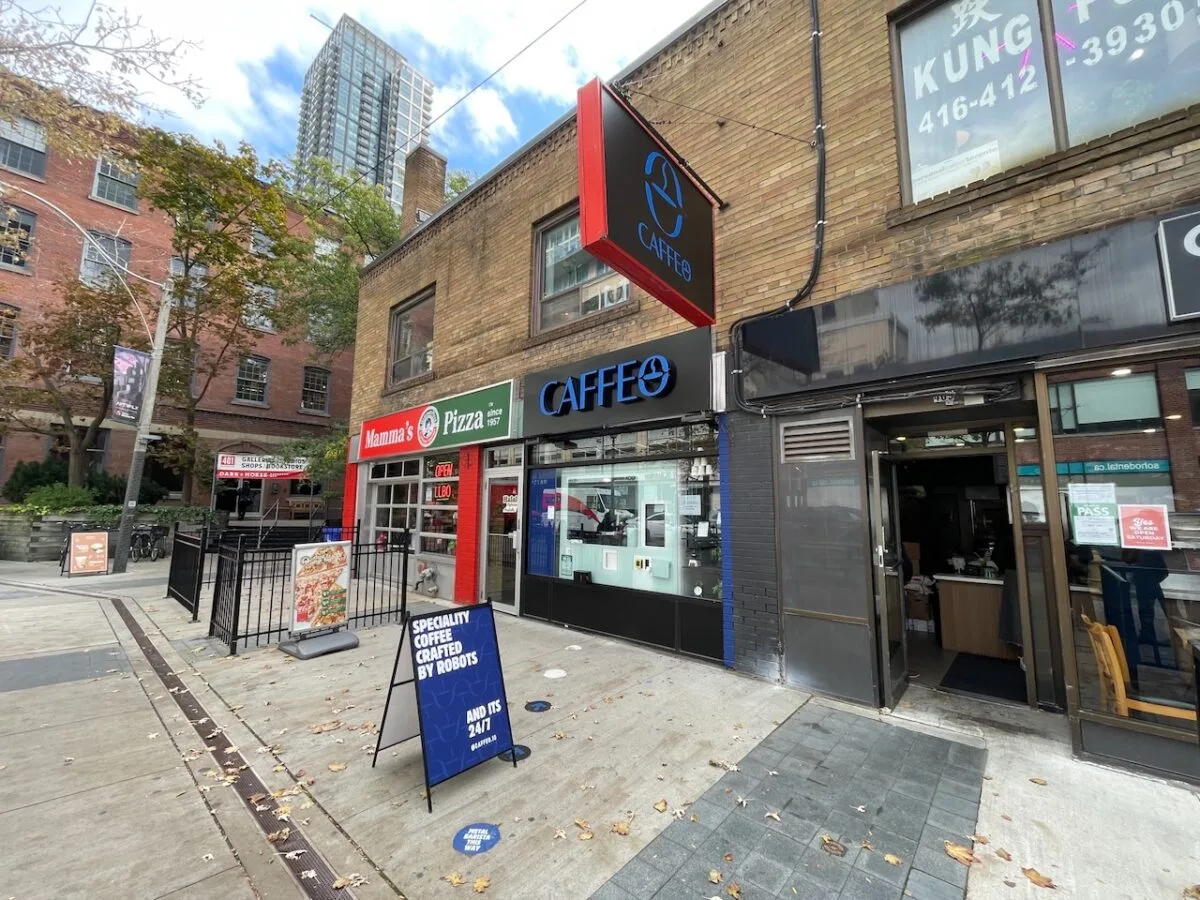
Caffeo storefront on Richmond Street West with a sandwich board reading speciality coffee crafted by robots
Caffeoactive
Toronto · founded 2023 · capital not disclosed

A robot arm working espresso equipment behind glass on Richmond Street West, opened September 2025, and the other half of chapter 04's finding: it passed a DineSafe Food Premises inspection twelve days in. A planned Series A and a five-location footprint have not appeared on schedule; the flagship keeps operating.

Photo: 6ix Retail (Dustin Fuhs) · reproduced for review, permission being sought
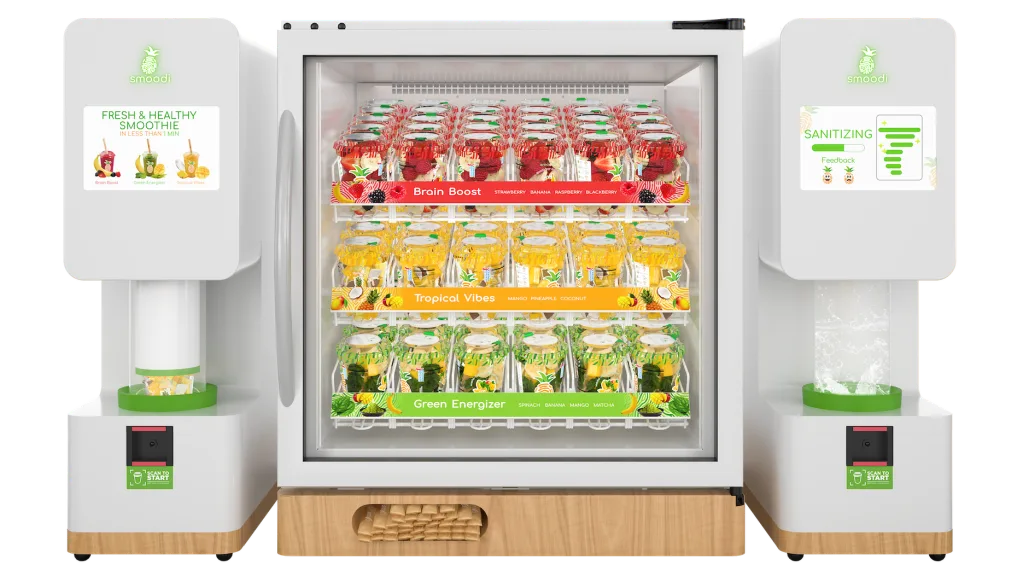
Smoodi self-serve blender stations flanking a glass-front freezer of fruit cups
Smoodiactive
Boston · founded 2018 · US$4.97M Series A (SEC Form D, 2022)

The cheaper thesis: no robot at all, just a self-cleaning countertop blender sold outright to operators, with pre-portioned frozen fruit cups behind it. A Series A in December 2022, national foodservice distribution, and a claimed 300-plus locations by 2026. Its machine is the US$14,999 rung in figure 5.1.

Photo: TechCrunch · reproduced for review, permission being sought

The operators that survive sell machines, sell venue amenities on service fees, or sell something simpler than a robot. None runs a street-facing unattended store on cup margins (chapters 03 and 07).