04
Regulatory posture
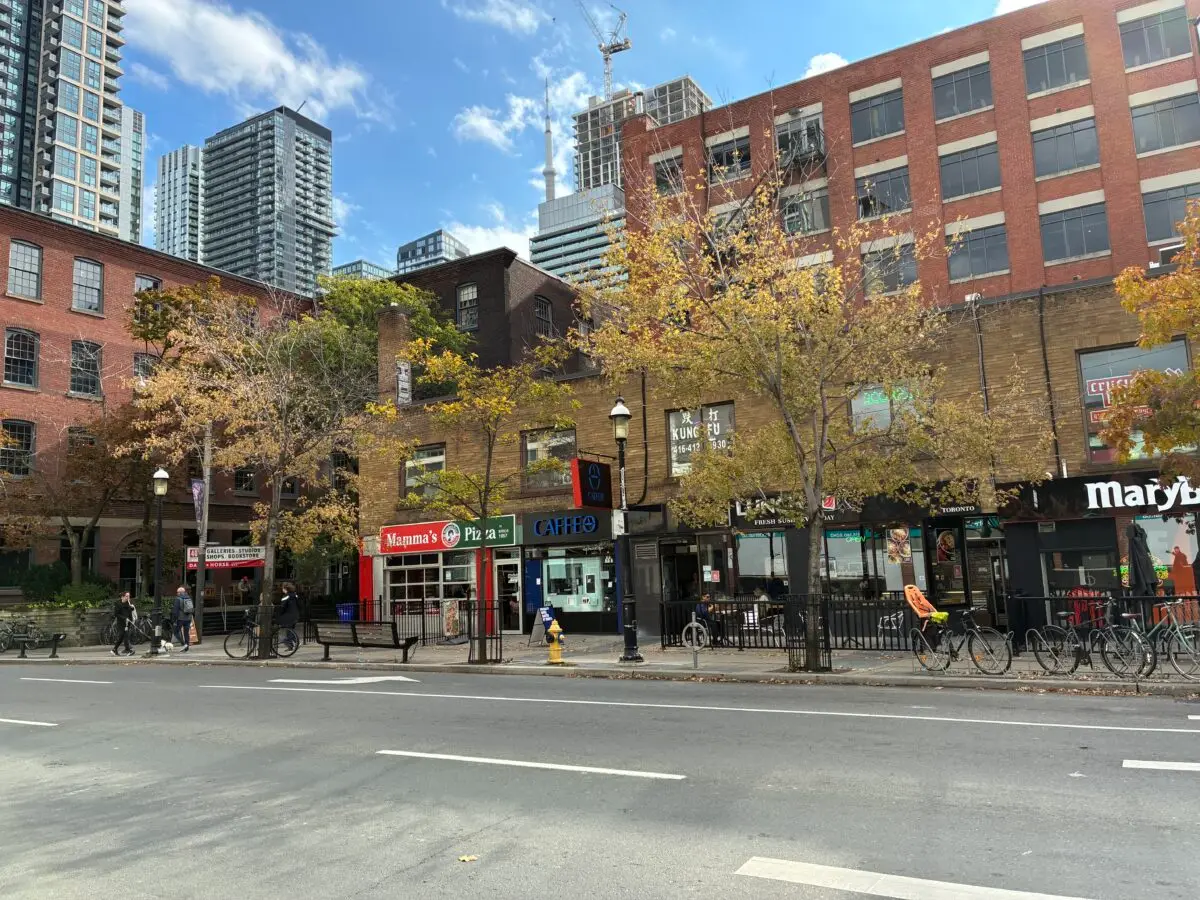 Caffeo, 405 Richmond Street West, Toronto. Photo: Dustin Fuhs, 6ix Retail; credit in Appendix B.
On paper, an unattended fresh-drink kiosk in Ontario needs a trained human standing next to it. In practice, two cities’ own open data show the paper is not how the category is policed.
Ontario, on paper
Ontario’s Food Premises regulation, O. Reg. 493/17, defines a “food service premise” as any food premise where meals or meal portions are prepared for immediate consumption. The definition is agnostic to who, or what, does the preparing.1 A “food handler,” by contrast, is defined only as a person; the regulation contemplates no machine substitute.1 Vending machines appear in the text as a species of equipment, not as an alternative premises class.1
Two sections then pull in opposite directions. Section 17, an equipment-sanitation rule, plainly contemplates lawful unattended operation: a machine that auto-mixes water needs a piped potable supply, and the operator’s name and phone number must be posted “if an employee of the operator is not in full-time attendance.”1 Section 32 requires that every operator of a food service premise keep at least one trained food handler or supervisor on the premise “during every hour in which the premise is operating.”1 A fresh drink blended from dairy and frozen fruit is a time-and-temperature-controlled food, which forecloses the regulation’s low-risk exemption on its face.1
So the classification question is exact: is the kiosk a food service premise, which section 32 staffs; or equipment inside a premise, which section 17 sanitizes? The regulation’s text does not resolve it. The Ministry’s own reference document acknowledges that many vending machines “operate automatically without employee assistance” while affirming that all other duties still apply, and leaves section 32 untouched.2
Toronto, in practice
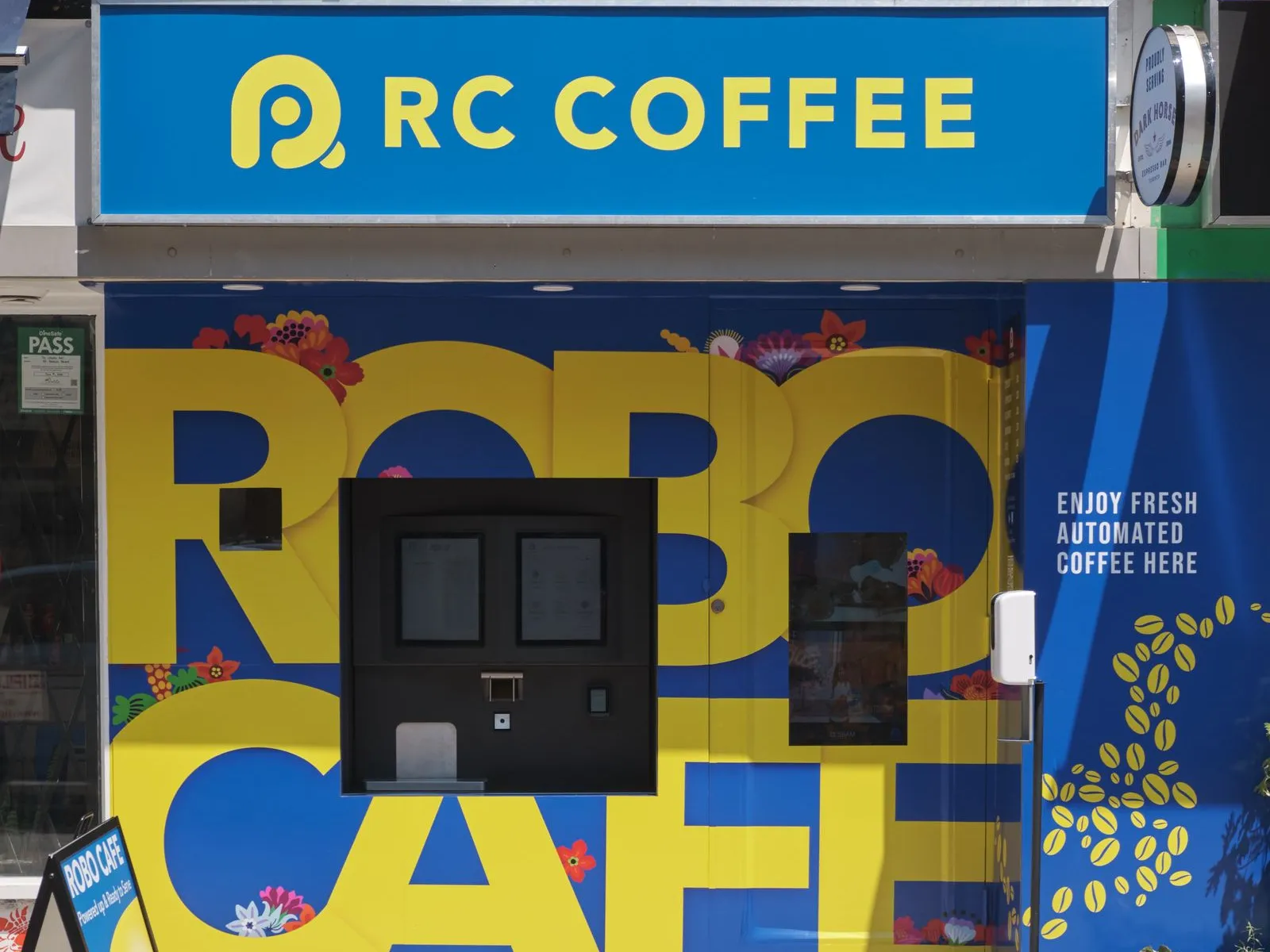
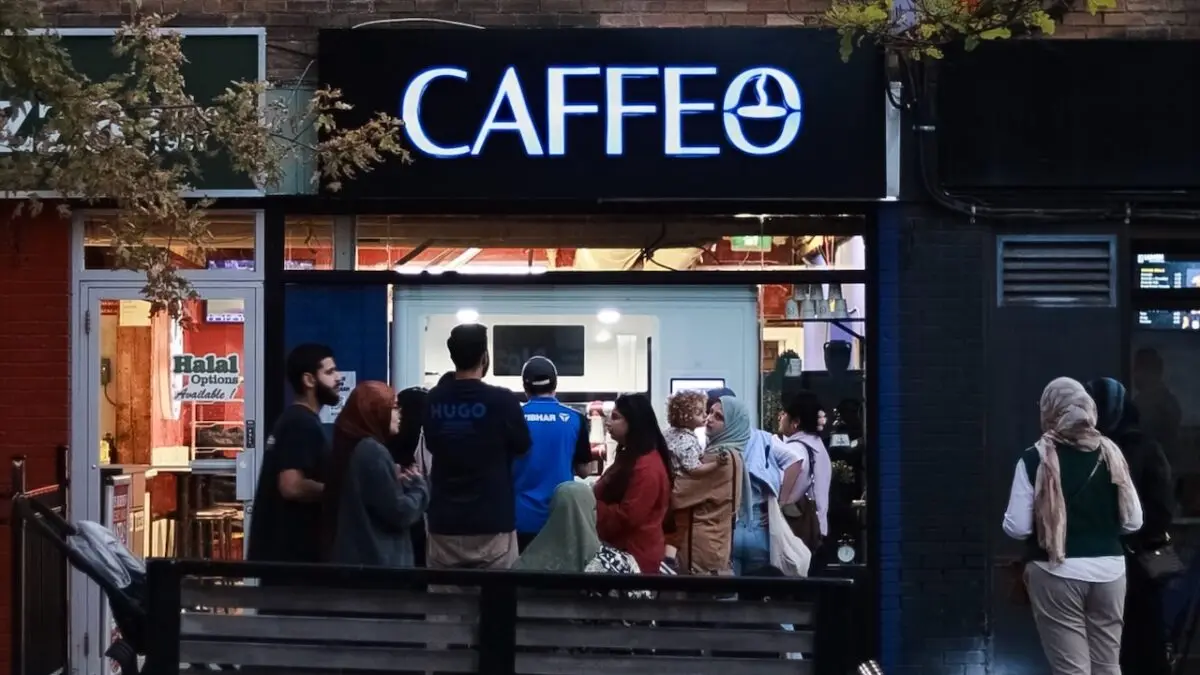
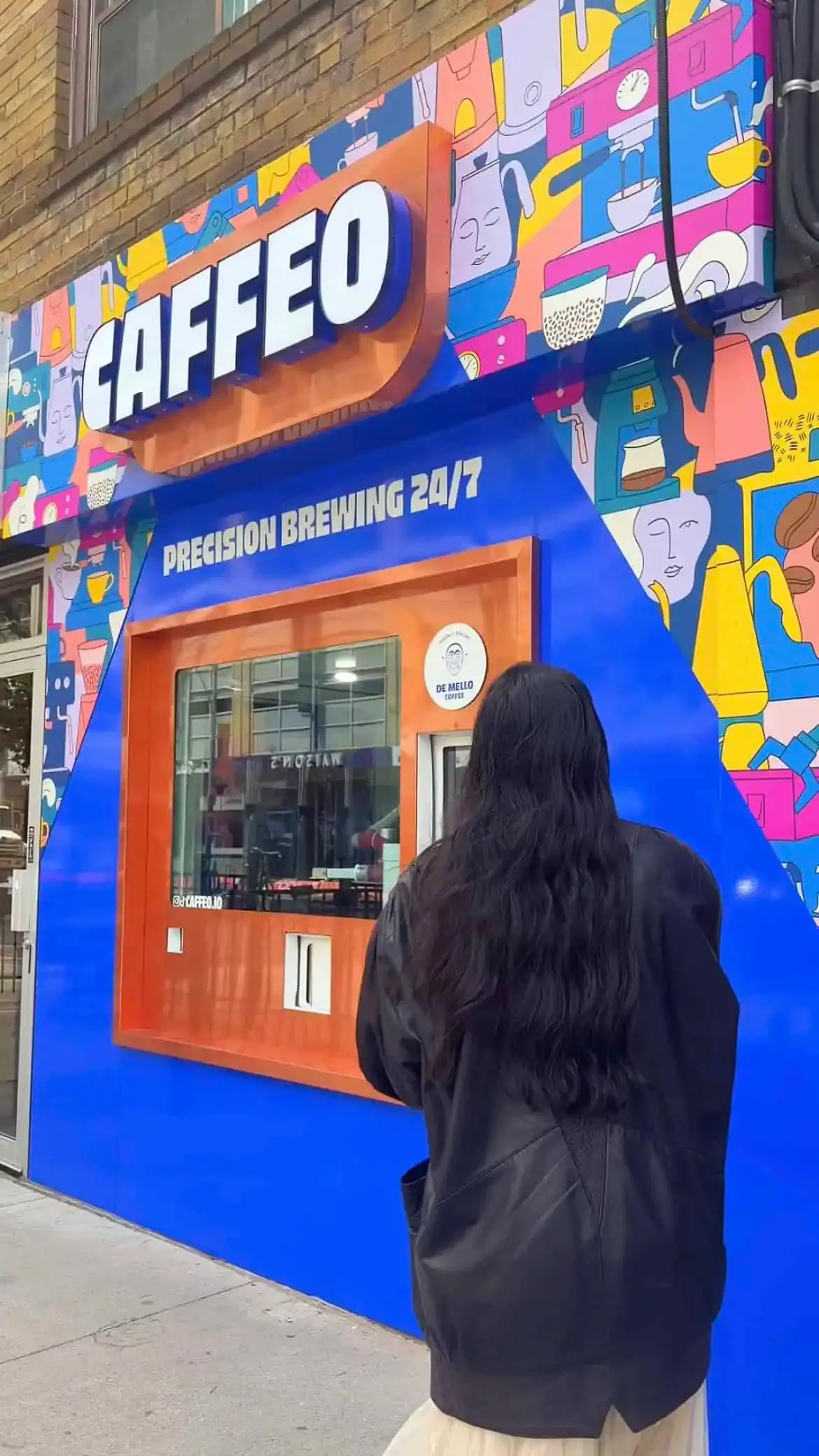
Toronto’s DineSafe open dataset holds 104,790 inspection records.3 RC Coffee has operated unattended robotic espresso kiosks, fresh dairy, cashless, since June 2021, at twelve or more listed locations including major hospitals. The dataset holds no record of it under any searchable name.3Caffeo, a directly comparable unattended fresh-dairy espresso kiosk that opened in September 2025, is listed, and passed a Food Premises inspection on 2025-09-12.3 The same city treats the same class of operation both ways; Toronto’s enforcement of the category is unsettled.
Chicago, in practice
Chicago’s municipal code anticipates this exact business model. Section 4-8-032 defines an automatic-food-vending-machine operation and routes it through a retail-food-establishment license, with health-department approval of the machine type and inspection of the commissary and servicing facilities.4 On paper, an operator’s dispensing locations carry licenses.
Queried directly through the city’s open-data API, across both the food-inspections and business-licenses datasets, at all nine of Zenblen’s Chicago venue addresses and over multiple spelling variants: zero records.5 The datasets are not blind at those addresses; the same queries return the co-located food operators, from campus dining and a chain bakery to the vending contractor’s own micro-markets, individually licensed and inspected.5 One Zenblen license does exist: a shared-kitchen-user license at a downtown address unconnected to any venue, renewed through January 2027.5 After five years of operation there is no dispensing-location record, though the code requires one.
Illinois’ statutory language is also softer than Ontario’s. The state food-handling act requires food service establishments to be under a certified manager’s “operational supervision,” wording that plausibly permits one manager across several unattended sites; Ontario’s section 32 says a person on the premise, every operating hour.6 The federal model code’s own working group put the strict reading plainly: an unattended operation selling anything beyond prepackaged, non-hazardous food “would be required to have a person-in-charge at all hours of operation.”7
The finding is regulatory lag, not wrongdoing: enforcement practice in two large cities has not caught up to a category their own codes already describe.
Chicago’s practice is not evidence that Ontario’s stricter text will not be applied in Ontario. The study therefore assumes Ontario’s text will be enforced as written.
Notes
- O. Reg. 493/17 (Food Premises), under the Health Protection and Promotion Act: s.1 definitions, s.3.1 exemption, s.17, s.32. ontario.ca/laws/regulation/170493 and canlii.org, accessed 2026-07-14. Statutory text cross-checked two ways (rendered e-Laws fetch; text extraction of the Ministry reference document, which reproduces the definitions verbatim).
- Ontario Ministry of Health, Food Premises Reference Document (2019), p. 18, on s.17, accessed 2026-07-14.
- City of Toronto DineSafe open dataset, 104,790 records at access, parsed directly, 2026-07-14. RC Coffee locations per rccoffee.com, accessed 2026-07-14. Caffeo (405 Richmond St W) inspection pass dated 2025-09-12 in the same dataset.
- Chicago Municipal Code §4-8-032 (automatic food vending machine operations, licensed through retail food establishments), accessed via the code’s indexed text, 2026-07-14.
- City of Chicago open data via the Socrata API: Food Inspections dataset 4ijn-s7e5 and Business Licenses dataset r5kz-chrr; 26 queries with full raw responses archived, 2026-07-14. Co-located examples include license 2796844 (chain bakery at a hospital address) and licenses 2877822 and 2882530 (the vending contractor’s café and micro-market at a hospital tower). The shared-kitchen-user license is 2762826, current renewal expiring 2027-01-15.
- 410 ILCS 625/3 (Food Handling Regulation Enforcement Act), ilga.gov, accessed 2026-07-14. Illinois adopts the FDA Food Code (2022) as the Illinois Food Code, dph.illinois.gov, accessed 2026-07-14.
- Conference for Food Protection, “Unattended Food Establishments” issue paper (2014 packet), foodprotect.org, accessed 2026-07-14.